Note about Bible translations
Some problems with Bible translations
11/15/20255 min read
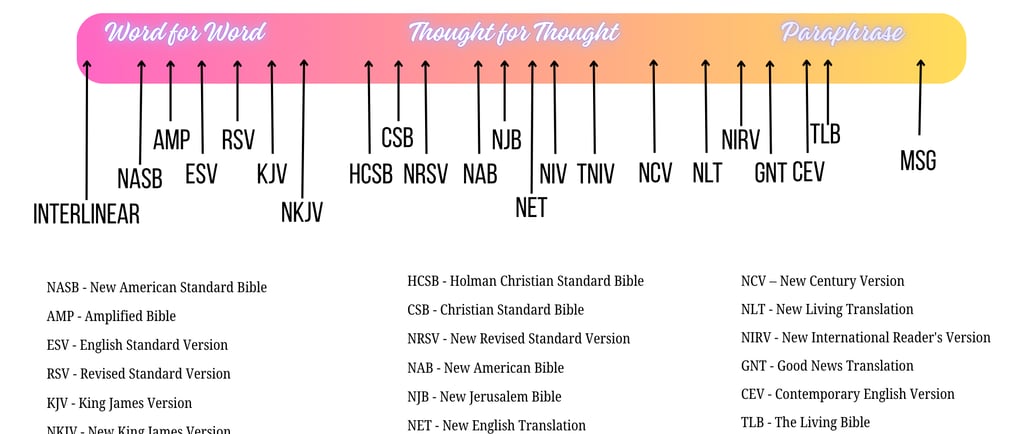
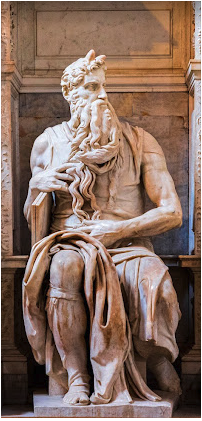
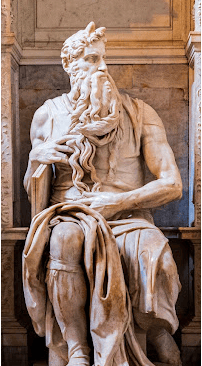
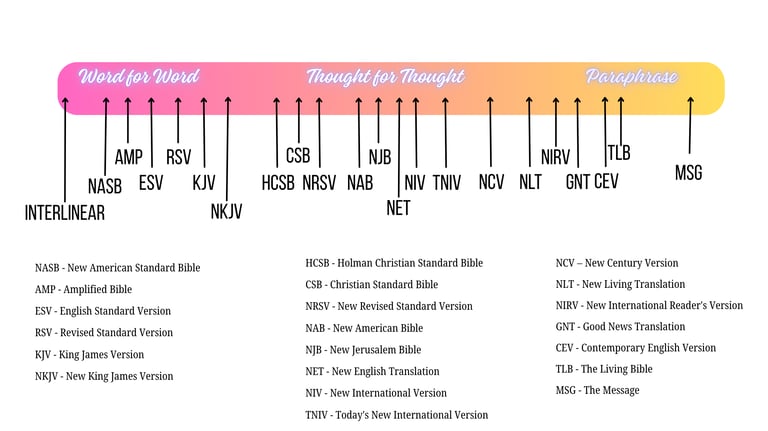
When Jerome, a priest from the 4th century, began revising the current Bible translation of his time, known as the Vetus Latina, he decided to expand his work and translate the entire Bible, incorporating all the books, including the apocryphal books. His method of translation wasn’t the “word for word” approach as we know it nowadays, as seen in the King James translation, ESV, or NASB. Still, he chose the “sense for sense,” giving his interpretation to some passages, which was a decisive point about the differences between the Bibles of Protestant, Roman Catholic, and Eastern Orthodox Christians, as explained by John D. Meade and Peter J. Gurry in the excellent book “Scribes & Scripture.” Due to a misinterpretation by Jerome, we have instances like the Moses statue depicted by Michelangelo, which is often misinterpreted as having horns.
These horns were based on the mistranslation of Jerome’s Vulgata in the passage of the Book of Exodus, chapter 34, verse 29. There, the original Hebrew text says that “his face was horned” after talking to God. This is an expression in Hebrew that means “his face shone,” which makes a lot more sense since Moses was using a veil when addressing the people, exactly to cover the uncomfortable glare from his face. Jerome’s idea is that the Bible should be translated as literally as possible in terms of meaning, but in this passage, we don’t know why he chose to be literal. Maybe he didn’t know this expression; who knows?
One of the most controversial translations from him depicts Eva as the agent who smashed the head of the serpent in Genesis 3:15, which says:
“And I will put enmity
between you and the woman,
and between your offspring and hers;
he will crush your head,
and you will strike his heel.”
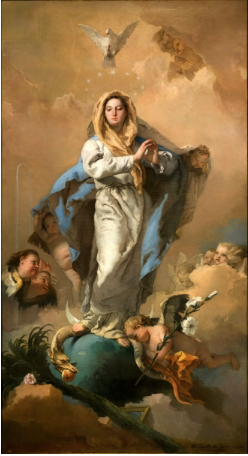
This is a prophetic passage from God to indicate that He will provide a savior for humanity who will come later and crush Satan. This figure is Jesus Christ, who will win the battle as the perfect Adam, but in Jerome’s translation, things got very weird. Jerome decided to make the savior not “Him,” but Eve, and the Vulgate reads, “She shall crush thy head, and thou shall lie in wait for her heel.” Can you see the problem? This translation influenced a developing view of Mary and her role in salvation later on. That’s why Roman Catholics venerate Mary. It’s all Jerome’s fault in a bad translation. No other translation has this interpretation from the original Hebrew.
Giovanni Battista Tiepolo, “The Immaculate Conception,” 1767-1769, depicting Mary crushing the serpent.
Not only that, but other mistranslations occurred when discussing the word “repent,” which was translated as “do penance.” That’s why Martin Luther, later on, wanted to translate the Bible from its original language into German, motivated by Jerome’s mistranslations that had generated many false teachings within the church, such as penances and the Virgin Mary as a figure of salvation.
I encourage Meade’s book above. He also mentioned NIV's recent translation, making a poor job by trying to please people instead of God, when they changed their language to be more inclusive, using the pronoun “they” instead of “he”. Meade says, “But the road to bad translation is paved with good intentions. Where the impulse to use inclusive language becomes a problem is in places such as Hebrews 2, which quotes from Psalm 8. The difference is clear in the NIV.” The difference Meade pointed out is below. Look at the use of “Them”, changing the real meaning of the context.
NIV 1984
"What is man that you are mindful of him, the son of man that you care for him? 7 You made him a little lower than the angels; you crowned him with glory and honor and put everything under his feet." In putting everything under him, God left nothing that is not subject to him. Yet at present we do not see everything subject to him. But we see Jesus, who was made a little lower than the angels, now crowned with glory and honor because he suffered death, so that by the grace of God he might taste death for everyone.
NIV 2011
"What is mankind that you are mindful of them, a son of man that you care for him? You made them a little lower than the angels; you crowned them with glory and honor and put everything under their feet." In putting everything under them, God left nothing that is not subject to them. Yet at present we do not see everything subject to them. But we do see Jesus who was made lower than the angels for a little while, now crowned with glory and honor because he suffered death, so that by the grace of God he might taste death for everyone.
Meade explains that “Where the connection to Jesus in the 1984 text is seamless, the NIV 2011 could give the impression that Jesus is being contrasted with humanity in Psalm 8. In fact, the writer of Hebrews sees something profound in the psalm, not just about humanity, but about Jesus, the ideal human being.“
The main problem is not interpreting some passages that are difficult to translate, but also some figures of speech, such as Exodus 34:6, where it is said:
And he passed in front of Moses, proclaiming, “The Lord, the Lord, the compassionate and gracious God, slow to anger, abounding in love and faithfulness.
The part “slow to anger” in its original says literally, “[He] has a long nose” (אֶ֥רֶךְ אַפַּ֖יִם - erek apayim). Here, the expression suggests that someone who gets angry has a nose that becomes red, full of blood, and therefore, someone with a long nose takes more time to become flushed. That’s why God is depicted with a long nose, an author’s anthropomorphism to indicate the purpose of the sentence. The problem lies in altering the coherence of the entire work, interpreting something that lacks support from the rest of the Bible, as Jerome did in the passages about Mary or Moses. Therefore, it is most important for you to read your Bible and to meditate on the Word of God daily so you will learn the real message when you look at the main line, the fullness of the Bible’s context and objective, which is pointing to the Messiah and the fulfillment of this promise in Jesus Christ.
Choose the translation you want to use wisely, and once you've made your choice, read it carefully.
Contact
Subscribe
hello@livingbyscripture.com
© 2025. All rights reserved.