
Magi
Why did the Magi give Jesus gold?
1/12/20263 min read
In Daniel 5, the book of Daniel describes the fall of Babylon, when Belshazzar asks for the Temple’s gold vessels and drinks from them at his party. God writes some mysterious words on the wall, and Daniel interprets them as the fall of Babylon to the Medo-Persian empire. In this newly conquered empire, Daniel is known to the ruler, Darius the Mede. This Darius is not to be confused with Darius I the Great, who came later, as related in other passages, such as Ezra, where Darius the Great allowed the Hebrews to rebuild the temple. The first Darius may be a governor under Cyrus, whose name also means "lord." In chapter 6, we see Darius in a strange position to throw Daniel into the Lions' den, where he hopes Daniel can get out of there alive. Later, Darius came to believe that YHVH is the only true God.
From this passage, we learn that Darius didn't want to throw Daniel to his apparently death sentence, but he was forced to do so because of the "law of the Medes and Persians no decree or edict that the king issues can be changed" (Daniel 6:15b). Why Darius couldn't be against the law is theme of much debate, but it seems the religion of the Persians, Zoroastrianism, created by Zoroaster, also known as Zarathustra (624-599 BC) was gaining traction and it was dominant as a law, reinforced later by Darius the great. Setting aside this speculation, we know that there was a law that this first Darius couldn't be against. That troubled him greatly. Perhaps because he was fond of Daniel, though the real reason remains unknown. Maybe Daniel was seen as wise, or diligent, but maybe it was because Daniel had "who has the spirit of the holy gods in him" as the queen of Babylon said to Belshazzar in Daniel 5:11, and this is an important point.
If Darius thought Daniel was found to have favor with God, as Darius may believe, that could imply that Darius was afraid to throw Daniel there. It's important to note that Zoroastrianism, the Persian religion, also holds that there is a single God, Ahura Mazda (Lord of Wisdom). Probably someone told Darius that Daniel had personal intimacy with the one God. After Darius observed what happened in the lions’ den, that Daniel's God sent His angel to shut the mouths of the lions (Daniel 6:22), Darius proclaimed that the God of Daniel was indeed the only true God (Daniel 6:26-27). Given the uniqueness of this event, it is reasonable to assume that it was known throughout the empire and that people became interested in studying Daniel's God.
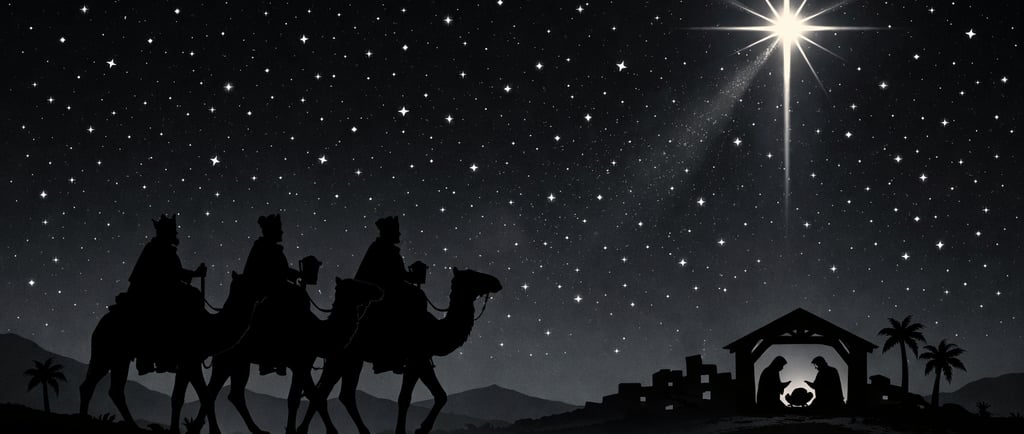
That's the part I believe is relevant, and why I believe the Bible is amazing. In Matthew 2:1, the apostle recounts that "wise men from the east" came to Jerusalem to visit Jesus. The Babylonian/Medo-Persian Empire was located east of Jerusalem and housed highly educated men who were experts in astrology. Note that these wise men came following a star from the east, a region of modern-day Iran that was Persia in ancient times. Matthew uses a particular term to define them, Magi (magos), and this term is unique to his gospel. The term “Magi” originally designated Median or Zoroastrian priests, but by New Testament times it was used broadly to describe individuals skilled in various secret arts, including dream interpretation, astrology, fortune-telling, magic, and divination. Why did these men travel approximately 900 miles to visit Jesus? Who were they?
Here is where the theory goes: Most likely, these men were the religious leaders from Persia, who were told that the true Messiah had just been born. From Daniel to Christ, around six hundred years had passed, and from generation to generation, these guys were instructed to wait for a Messiah. They knew about a Messiah coming, probably from Israelite writings, and these men also received divine revelation regarding the subject they had been studying for generations after Daniel's death. Perhaps they also knew the prophecy of Balaam, from the town of Pethor near Persia, described in Numbers 24:17: "I see him, but not now; I behold him, but not near. A star will come out of Jacob; a scepter will rise out of Israel. He will crush the foreheads of Moab, the skulls of all the people of Sheth." Then, they saw the Bethlehem star and concluded that they must follow it. What did they bring? Among other things, gold. They were returning the very same gold that the Babylonians had taken from God’s Temple at Belshazzar's party, and returning (perhaps a portion of it) to the true owner, the King of kings and Lord of lords, Jesus the Messiah.
Contact
Subscribe
hello@livingbyscripture.com
© 2025. All rights reserved.