
How to study your Bible
We must have a simple but clear way to study the Bible, without much complication
11/14/202510 min read


Introduction
Nowadays, people from the church often misinterpret some biblical verses because they don’t fully study the passages, and may unintentionally teach flawed theology.
The Bible is a hard book to understand. In fact, the Bible comprises 66 books written by approximately 40 authors over a period of around 1,500 years. Throughout three different languages (Ancient Hebrew, Koine Greek, and parts in Aramaic), the Bible was written in a diverse culture, for diverse peoples. Still, it has the same purpose: to point us to the Messiah.
That’s why we must have a simple yet clear way to study the Bible, without much complication, and utilize available tools for that: Books, podcasts, YouTube videos, Chat-GPT (with caution), software, and everything else at our disposal.
In this post, we are learning how.
Definitions:
Lexicon: A Bible lexicon is a specialized dictionary that provides detailed information about the meaning, usage, and historical context of words in the original languages of the Bible (Hebrew, Aramaic, and Greek). It goes beyond simple definitions by offering insights into the nuances and subtleties of a word's meaning as used in specific biblical passages.
Exegesis: Critical explanation or interpretation of a text, especially of scripture
The Three C’s methodology
When studying the Bible, ask yourself the three C’s: Context, Content, and Connections.
What’s the Context in which this text was written? Who was the audience? When was it written? By whom?
What is the Content of the text? What does the text say? What’s the plot? What’s the idea presented?
What are the other Connections that this text/author alludes to? How does the Bible show its links? Please read all the other passages where the links point to understand them.
Example 1
Following this simple method, you can gain a great deal of insight into the passage. Just please don’t take one verse out of context and throw it at people. I’ll give you an example: When Jesus talks about lust in Matthew chapter 5:
📖 Passage:
“If your right eye causes you to sin, tear it out and throw it away. For it is better that you lose one of your members than that your whole body be thrown into hell. And if your right hand causes you to sin, cut it off and throw it away. For it is better that you lose one of your members than that your whole body go into hell.”
— Matthew 5:29–30 (ESV)
✅ Context
Jesus is speaking during the Sermon on the Mount, addressing a crowd primarily composed of Jews familiar with the Law of Moses. These were people raised within the structure of the Torah, often under the religious influence of Pharisees and teachers of the Law who focused on external behavior more than internal transformation.
Right before this passage, Jesus says:
“You have heard that it was said, ‘You shall not commit adultery.’ But I say to you that everyone who looks at a woman with lustful intent has already committed adultery with her in his heart.”
— Matthew 5:27–28
In Jewish law, it was extremely hard to prove adultery—two witnesses had to see it happen. So people could be unfaithful in heart and thought, while still looking “innocent” under the law. Jesus turns that logic on its head, exposing the inner heart.
Also, keep in mind that Biblical Hebrew had no word for "brain"—the heart was the seat of thought, will, and emotion. That’s why Jesus focuses on what’s inside. The passage employs hyperbole (intentional exaggeration) to emphasize the seriousness of addressing sin from the inside out.
✅ Content
The main idea here is not physical mutilation. Jesus is using powerful imagery to say:
Sin is serious.
It starts in the heart and mind.
You need to be willing to remove anything in your life—as precious as your eye or hand—if it’s leading you away from God.
But again, cutting off your hand won’t stop lust if the issue is your heart and thoughts. That’s the deeper point: external actions won’t fix internal brokenness.
✅ Connections
Ezekiel 36:26
“And I will give you a new heart, and a new spirit I will put within you. And I will remove the heart of stone from your flesh and give you a heart of flesh.”
God promises spiritual transformation from the inside, not self-mutilation or religious performance. This connects directly to Jesus’ message: real change begins with a new heart.
1 Samuel 16:7
“For the Lord sees not as man sees: man looks on the outward appearance, but the Lord looks on the heart.”
When Samuel looked at Jesse’s sons to choose a king, God reminded him that true judgment comes from the heart, not what people see. God ultimately chose David—whom no one expected.
Romans 12:2
“Do not conform to the pattern of this world, but be transformed by the renewing of your mind. Then you will be able to test and approve what God’s will is—his good, pleasing and perfect will.”
Paul ties this idea together: You don’t overcome sin by force or rules alone. You do it through a renewed mind—a transformation God brings when we align our hearts with His will.
Example 2
📖 Passage:
“For where two or three gather in my name, there am I with them.”
— Matthew 18:20 (NIV)
✅ Context
This verse is often quoted to encourage small prayer groups or justify church meetings with low attendance—but when we look at the full passage, the context is not about prayer or worship gatherings. It’s about church discipline and the process of confronting sin within the community.
Let’s read the surrounding verses (Matthew 18:15–20):
"If your brother or sister sins, go and point out their fault, just between the two of you. If they listen to you, you have won them over. But if they will not listen, take one or two others along, so that ‘every matter may be established by the testimony of two or three witnesses.’ If they still refuse to listen, tell it to the church; and if they refuse to listen even to the church, treat them as you would a pagan or a tax collector.
Truly I tell you, whatever you bind on earth will be bound in heaven, and whatever you loose on earth will be loosed in heaven.
Again, truly I tell you that if two of you on earth agree about anything they ask for, it will be done for them by my Father in heaven. For where two or three gather in my name, there am I with them.”
Matthew 18:15-20
In ancient Jewish practice, at least two witnesses were required to confirm a matter legally (Deuteronomy 19:15). Jesus applies this principle to the church community, not for worship, but for correction and restoration.
✅ Content
Jesus lays out a step-by-step guide for handling unrepentant sin among believers:
Go privately.
Bring one or two others.
Tell it to the church.
If the person refuses to listen even to the church, treat them as a non-believer.
Then comes the statement:
“Where two or three gather in my name…”
Jesus is saying that in this process of confrontation and correction, done with sincerity and humility, He is present. He affirms the spiritual authority of the church when it follows His instructions with integrity.
This is not primarily an encouragement about worship attendance. It’s a promise that Jesus stands with those who are acting righteously and graciously in difficult matters of correction and accountability.
✅ Connections
Deuteronomy 19:15
“A matter must be established by the testimony of two or three witnesses.”
Jesus echoes this legal principle from the Law of Moses to emphasize the importance of due process and fairness in judgment.
1 Corinthians 5:12–13
“What business is it of mine to judge those outside the church? Are you not to judge those inside? God will judge those outside. ‘Expel the wicked person from among you.’”
Paul applies Jesus’ teaching by instructing the church to take sin seriously—and to protect the integrity of the body of Christ.
John 8:10–11
Jesus said, “Neither do I condemn you; go and sin no more.”
Even when rebuking sin, the goal is restoration, not condemnation. Jesus is always present in that process.
Matthew 6:6
“When you pray, go into your room, close the door and pray to your Father, who is unseen...”
God hears our individual prayers. His presence doesn’t require a quorum. That’s why interpreting Matthew 18:20 as a prerequisite for God to show up in prayer misses the point.
Example 3: Paul’s Letters
First of all, if you are studying Paul’s letters, read the entire letter at once. Set aside one hour for yourself, sit down, and read the specific letter in its entirety. Then you’ll have a bigger context for the letter fresh in your head. Try to understand the main context. For example, if you are reading the letter to the Corinthians, what was going on in Corinth that caused Paul to write 1 Corinthians? How does he come to learn of their situation? What kind of relationship and former contacts has he had with them? What attitudes do they and he reflect in this letter?
Let’s get one example:
📖 Passage
"Has the potter no right over the clay, to make out of the same lump one vessel for honorable use and another for dishonorable use?"
— Romans 9:21 (ESV)
✅ Context
Romans 9 is part of Paul’s larger argument (Romans 9–11), where he addresses a major theological problem: If God chose Israel, why are so many Jews rejecting the Gospel?
Paul’s audience is a mix of Jewish and Gentile Christians in Rome, and he’s explaining that God’s promises have not failed, even though ethnic Israel is not uniformly believing in Christ.
In Romans 9, Paul walks through:
God’s right to choose (e.g., Isaac over Ishmael, Jacob over Esau)
His mercy and hardening (e.g., Pharaoh)
And then, this potter analogy, which affirms God’s sovereign authority to shape history and people as He wills.
This analogy responds to the implied objection:
“If God decides who receives mercy, how can He blame anyone?” (v. 19)
Paul answers: God is the Creator, and we are His creation. Just like a potter has the right to make different vessels for different uses, so does God.
✅ Content
The core idea of Romans 9:21 is this:
God, as the divine potter, has full authority and freedom over what He creates.
He can make vessels for honor (e.g., those who receive mercy) and vessels for dishonor (e.g., those who reject Him or are used to demonstrate His justice).
This isn't about arbitrary cruelty, but about God’s justice, purpose, and mercy working together in ways we may not fully grasp.
Paul is not saying human beings have no responsibility. In fact, as the letter continues (Romans 10), Paul emphasizes human response, faith, and preaching. Romans 9 focuses on God's side of the equation—His initiative and authority.
✅ Connections
Here is the case against Calvinists. Paul is quoting here from Jeremiah 18:5-10.
1. Jeremiah 18:5–10 — The Key Background
“Like clay in the hand of the potter, so are you in my hand, O house of Israel.”
God tells Jeremiah to go to the potter’s house to see a visual parable:
The potter reshapes a marred vessel into something else—not because the clay is innocent, but because the potter is skilled and purposeful.
God says clearly: If a nation repents, He relents; and if it rebels, He can judge it.
This shows that even though God has sovereign power, His actions are responsive to human behavior—He is just and relational, not mechanical or fatalistic.
Jonah 3:10
“Then God saw their works, that they turned from their evil way; and God relented from the disaster that He had said He would bring upon them, and He did not do it.”
2. Isaiah 29:16
“Shall the potter be regarded as the clay…?”
Critiques those who question God’s ways—reminds us that God’s wisdom surpasses human understanding.
3. Isaiah 45:9
“Woe to him who strives with him who formed him, a pot among earthen pots!”
Similar rebuke to those who argue against God's right to shape their lives.
4. 2 Timothy 2:20–21
Paul revisits the vessel metaphor:
Some vessels are for noble use, others for common use—but those who cleanse themselves can be useful to the Master.
This suggests that repentance and readiness matter, even within God's sovereign plan.
Books to read about Bible interpretation
How to read the Bible for all its Worth, by Gordon D. Fee and Douglas Stuart
Why is it important: One of the best books for biblical interpretation. A classic.
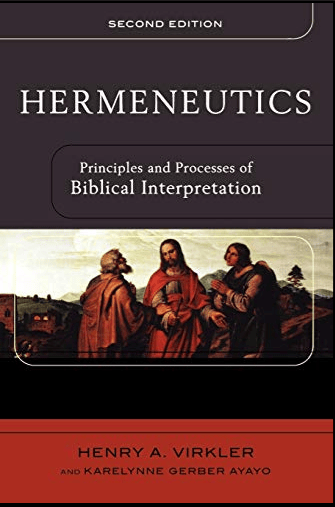
Hermeneutics: Principles and Processes of Biblical Interpretation, by Henry A. Virkler.
Why is it important? Here, you can find the detailed process of biblical interpretation.
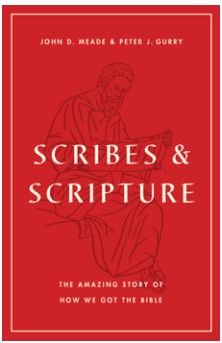
Scribes and Scripture: The Amazing Story of How We Got The Bible, by John D. Meade and Peter J. Gurry
Why is it important: A very interesting book about how we got the Bible, with translation challenges, misinterpretations, and deep history.
Check the author’s interview with Wes Huff here: https://www.youtube.com/watch?v=Mkc5JX5hcB8
YouTube channels
Apologetics Canada
https://www.youtube.com/@ApologeticsCanada
Why is it important:
Wes Huff
https://www.youtube.com/@WesHuff
Why is it important: Wes Huff is very popular these days, and his teachings are very interesting
N.T. Wright Clips
https://www.youtube.com/@n.t.wrightclips6944
N.T. Wright is a famous biblical scholar
The Biblical Roots
https://www.youtube.com/@TheBiblicalRoots
Why is it important? I recently discovered the author R. L. Solberg, based in Nashville, TN, who offers good content on apologetics.
Software
Logos Bible
logos.com Price: $9.99 per month (basic plan).
Why is it important: The most complete software for Bible studies. Their AI is very good.
Bible Gateway
https://www.biblegateway.com/ Price: $39.99 per YEAR ($3.33 per month)
Why is it important: Many resources, including the NIV Application Commentary
Accordance Bible Software
https://www.accordancebible.com/ Starter Collection – English Specialty - Sale Price: $44.95
Why is it important: An easier interface, along with tons of resources. Many plans and resources are available.
The Bible Project
https://bibleproject.com/classroom/home Free
Why is it important: Many resources to better understand each book of the Bible


Contact
Subscribe
hello@livingbyscripture.com
© 2025. All rights reserved.